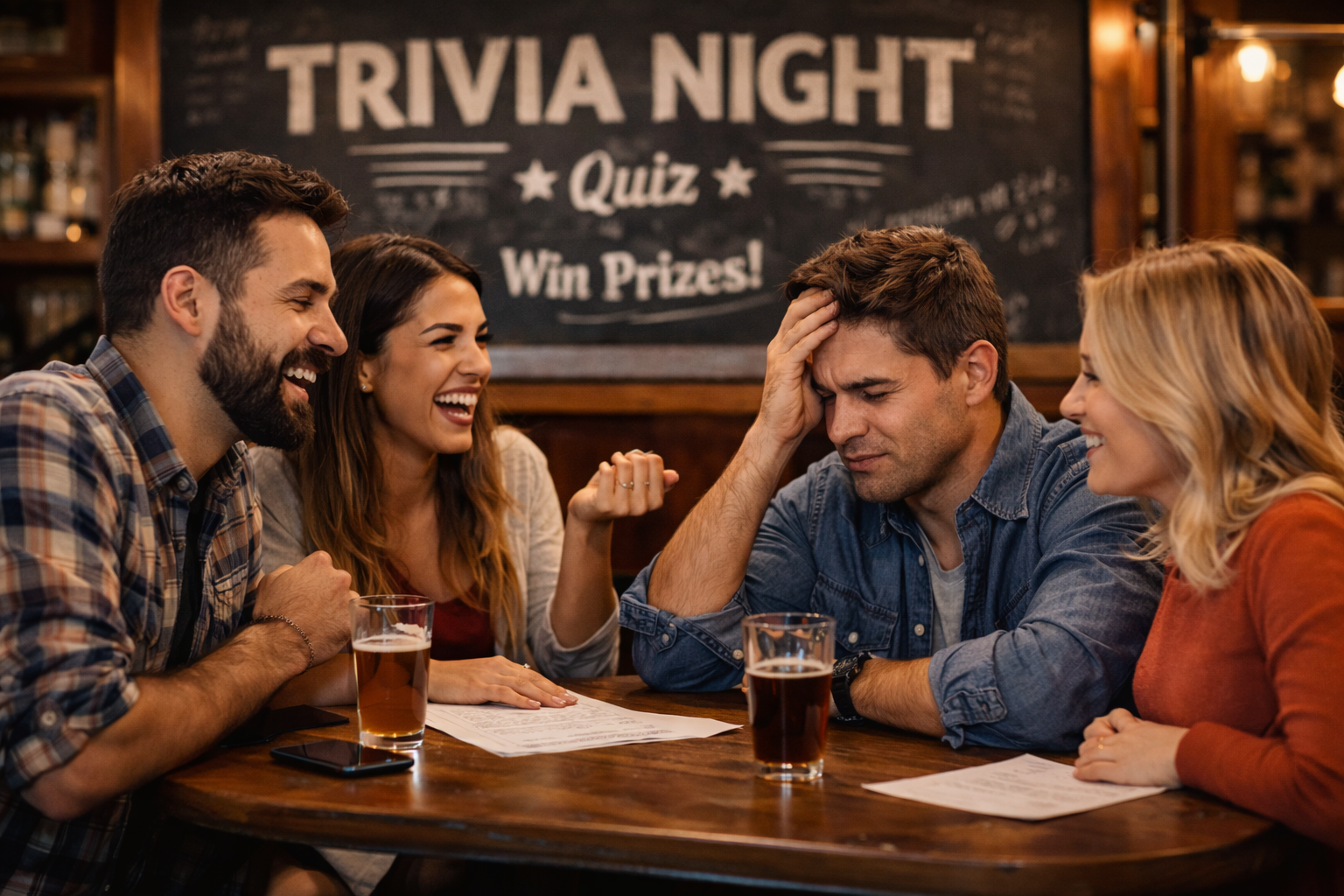
Balancing easy vs hard trivia questions is the difference between “this is awesome” and “why are we even here.” Trivia difficulty controls the mood in the room. Easy questions get people talking fast and build confidence. Hard questions spark arguments, laughs, and those big “no way” moments. But if you lean too far in either direction, the game gets weird. Too easy, and everyone checks out. Too hard, and teams stop guessing because nothing feels winnable.
The sweet spot comes from mixing levels on purpose. You want a few layups, a steady run of medium questions, and just enough hard hitters to make the room buzz. In this article, you’ll get examples of trivia difficulty levels, plus tips for testing your questions so your easy vs hard trivia balance feels fair, fun, and repeatable.
Why Trivia Difficulty Matters More Than You Think
Trivia difficulty controls how people feel during the game. Not just whether they win, but whether they stay engaged. Easy vs hard trivia questions shape confidence, pacing, and how much people talk between questions.
Think about an easy question like:
“What animated show features a foul-mouthed kid named Cartman?”
Almost everyone locks in an answer. Teams laugh. Someone does a terrible Cartman voice. The room warms up fast.
Now jump straight to a hard one:
“In what season and episode does Kenny first stay dead for more than one episode?”
Suddenly, the energy shifts. Teams stare at the table. Phones get tempting. People stop writing and start shrugging.
Neither type is bad. The problem shows up when the trivia difficulty isn’t intentional. Easy questions work best early or after a brutal round. Hard questions shine when players already feel confident and invested. Medium questions keep the game moving and stop momentum from dying.
When you balance easy vs hard trivia on purpose, players stay guessing, debating, and laughing. When you don’t, trivia turns into homework or background noise.
Examples of Trivia Difficulty Levels

Trivia difficulty is all about how far you zoom in. Same shows. Same universe. Very different experience depending on how specific you get. Below are cleaner, sharper examples of trivia levels that feel natural at a trivia night and lean into adult animation without getting obscure for no reason.
Easy Trivia Questions
Easy questions should feel obvious the moment you hear them. These warm people up and get answers on the page fast.
Examples:
- Which animated TV show takes place in the town of South Park, Colorado?
- Who is the foul-mouthed kid on South Park known for wearing an orange parka?
- What animated family lives at 742 Evergreen Terrace?
These work because nobody feels locked out. Even someone half-listening can jump in and contribute. Easy questions belong early or right after a brutal round.
Medium Trivia Questions
Medium questions reward people who actually watch the show. They spark short debates but still feel fair.
Examples:
- What is the name of Cartman’s Christian rock band?
- Which Simpsons character owns and runs the Kwik-E-Mart?
- In Family Guy, what is the name of Stewie’s teddy bear?
Teams usually know this, but they talk it through. Someone hesitates. Someone else remembers a scene. That discussion keeps energy up.
Hard Trivia Questions
Hard questions test memory, not luck. Players may not be 100 percent sure, but they feel like they should know.
Examples:
- What product does Cartman sell during the “Tsst” episode after watching Dog Whisperer?
- What was the first non-Treehouse of Horror episode of The Simpsons to kill off a recurring character?
- In Family Guy, what was the original network that aired the show before its first cancellation?
Hard questions land best later in the game. By then, teams are invested and willing to take risks. A good hard question makes people groan, laugh, and argue in equal measure.
What Happens When Trivia Is Too Easy
Easy trivia feels great for about five minutes. Everyone is answering. Scores stay close. People feel smart. Then something shifts. When trivia difficulty never changes, the game loses its edge.
The biggest issue is predictability. If every question feels like a gimme, teams stop thinking. Answers get written down instantly. Conversations die because there is nothing to debate. Players start waiting for the next question instead of engaging with the current one.
Too-easy trivia also flattens competition. Strong teams pull ahead early, and weaker teams never get a chance to catch up because nothing creates swings. When everyone knows the answer, luck and strategy disappear.
You will see the signs fast:
- Teams stop whispering and start sitting quietly
- Phones come out between questions
- Reactions to correct answers disappear
Easy questions still matter. They just cannot carry the whole game. Without medium and hard trivia mixed in, easy vs hard trivia balance breaks down, and the night starts to feel more like background noise than an event.
What Happens When Trivia Is Too Hard
Hard trivia can be fun, but only in small doses. When every question feels impossible, the room changes fast. People stop guessing because it feels pointless. Instead of debating answers, teams stare at each other waiting for the reveal.
The biggest problem with overly hard trivia is frustration. Players do not mind missing a tough question if they felt close. They do mind when the answer feels random or overly specific. Once that happens a few times in a row, confidence drops and energy goes with it.
You can usually spot it when:
- Teams leave answers blank
- Jokes replace real guesses
- Groans replace laughter at the reveal
Hard questions also slow the game down. Reading longer questions takes more time. Explaining obscure answers kills momentum. What should feel challenging starts to feel like work.
Hard trivia works best as a spike, not the baseline. One tough question can create a memorable moment. A whole round of them makes players check out.
The Ideal Easy vs Hard Trivia Ratio
There is no perfect formula, but there is a reliable range that works for most trivia nights. The goal is balance, not equality. You want players to feel smart often, challenged sometimes, and surprised once in a while.
A simple breakdown that works:
- About 40 percent easy questions
- Around 40 percent medium questions
- Roughly 20 percent hard questions
Easy questions build confidence and keep everyone involved. Medium questions carry the game and create most of the discussion. Hard questions add tension and give strong teams something to chase.
The order matters just as much as the ratio. Start with easy and medium to warm the room. Drop in a hard question once players are comfortable. Follow it with something more approachable so the game can breathe again.
Variety matters more than toughness. A mix of easy vs hard trivia keeps attention high because players never know what is coming next. When difficulty shifts naturally, the game feels fair even when answers are missed.
How to Test Trivia Difficulty Before Game Night

The fastest way to ruin a trivia night is finding out your questions are broken while people are already playing. Testing trivia difficulty ahead of time saves you from awkward reveals and dead rooms.
Start by reading each question out loud. If it sounds confusing when spoken, it will be worse in a loud room. Clean wording almost always lowers accidental difficulty.
Next, answer your own questions without notes. If you hesitate for more than a few seconds, the question is probably harder than you think. Hosts are usually the worst judges because they already know the answers.
Then try the hallway test. Ask someone who casually knows the topic. Not a superfan. Not someone who helped write the questions. If they can confidently answer most easy questions and at least engage with medium ones, you are on the right track.
Pay attention to emotional reactions:
- Instant answers mean easy
- Short debates mean medium
- Blank stares mean hard
If everything falls into one category, adjust. Swap a hard question for a medium one. Reword instead of replacing. Small tweaks can shift trivia difficulty without rewriting the whole round.
Adjusting Difficulty Mid-Game Without Anyone Noticing
Even with testing, real rooms behave differently. A question you thought was medium lands like a brick. A hard one gets answered instantly. Good hosts adjust on the fly without calling attention to it.
The easiest fix is question order. If two hard questions land back-to-back, follow them with something clearly easier. A familiar character. A catchphrase. A broad pop culture moment. Players reset fast when they feel a win coming.
Keep a few flexible questions in your back pocket. These should be easy or medium and work in any round. If the room energy dips, swap one in and move on. Nobody knows what was “planned.”
You can also soften a question during delivery. Add a small hint. Repeat a keyword. Emphasize a familiar name. These tiny cues lower difficulty without changing the answer.
Watch the room, not the score. If people are talking, laughing, and arguing, the difficulty works. When writing stops, and heads drop, it is time to course-correct.
Balancing easy vs hard trivia is not about perfection. It is about feel. When trivia difficulty stays dynamic, players stay engaged, and the game feels alive from the first question to the last.
Bringing It All Together

Balancing easy vs hard trivia questions keeps the game fun, competitive, and engaging from start to finish. When trivia difficulty feels intentional, players stay involved even when they miss answers. The room stays loud. Debates keep happening. Energy does not drop off halfway through the night.
Easy questions pull people in and build confidence. Medium questions do the real work and keep teams talking. Hard questions create those standout moments that people remember later. When all three show up in the right places, trivia feels less like a test and more like an experience.
If you want to see how trivia difficulty fits into the bigger picture of hosting a great game, check out How to Host a Trivia Night That Everyone Will Love. Use both together, and your questions will feel balanced, fair, and worth coming back for.
FAQ
Q: What is the best mix of easy vs hard trivia questions?
A: A solid starting point is about 40% easy, 40% medium, and 20% hard. If your crowd is casual, lean a little easier. If it’s competitive regulars, add a few more tough ones.
Q: How do I know if my trivia questions are too hard?
A: If teams leave blanks, stop debating, or start joking instead of guessing, the difficulty is too high. A hard question should feel challenging, not hopeless.
Q: How do I know if my trivia questions are too easy?
A: If answers come instantly and the room gets quiet between questions, the game is probably too easy. Easy questions should warm people up, not carry the whole night.
Q: Should I put hard questions at the beginning or the end?
A: Save harder questions for later, once teams feel confident and invested. Start with easy and medium so the game builds momentum instead of stalling early.
Q: Can I fix difficulty issues during the game?
A: Yes. Follow a tough question with an easier one to reset confidence and keep energy up. Keep a few flexible backup questions ready so you can swap without anyone noticing.
Leave a Reply