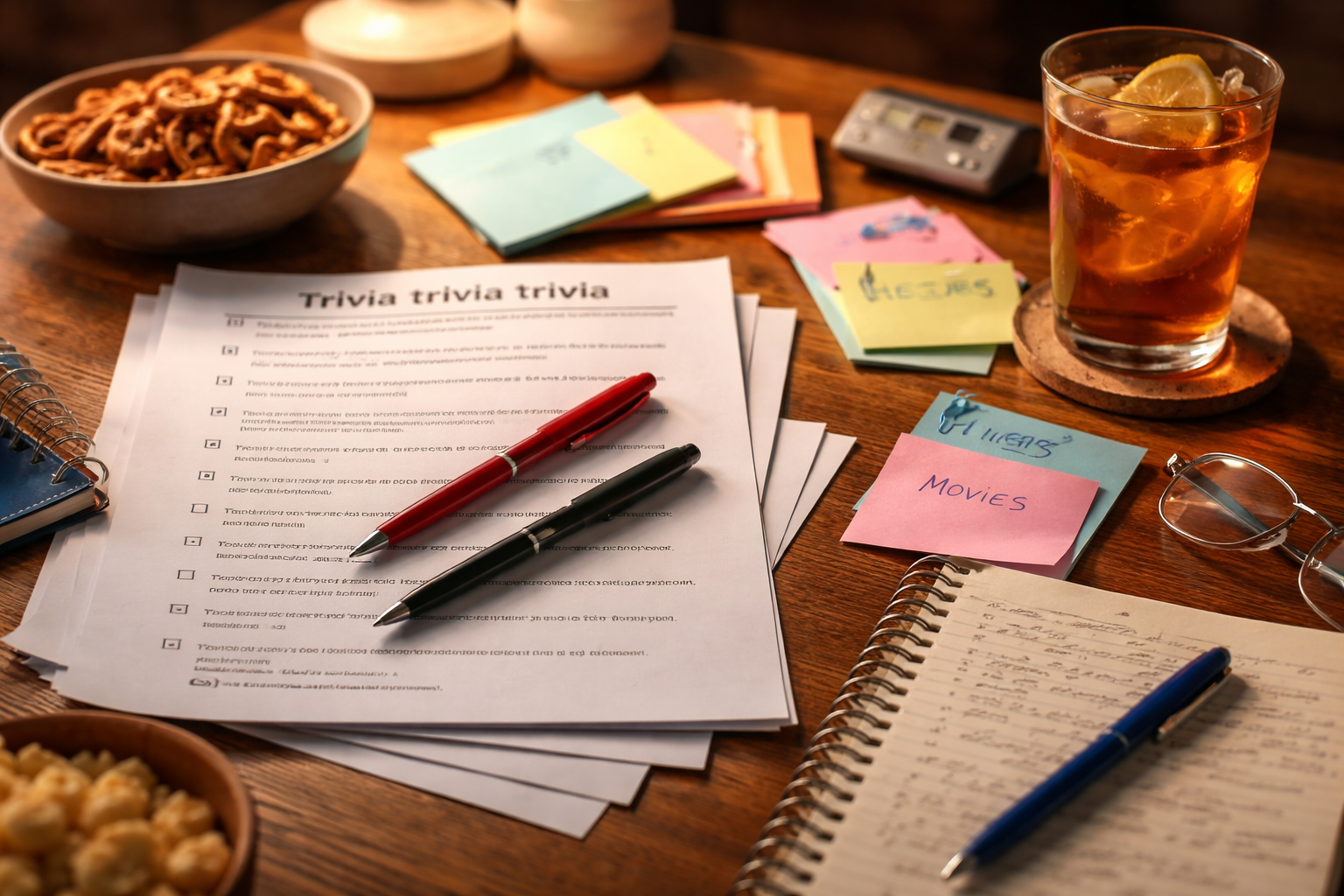
Coming up with trivia questions is fun. Realizing half of them are too confusing, too easy, or weirdly specific once people start playing? Not so fun.
That is why it helps to test trivia questions before game night. A question can sound great when you write it, then totally flop once real people try to answer it. Maybe the wording is off. Maybe there are two answers that seem right. Maybe the question only makes sense if someone knows the topic way too well.
A little testing helps you catch those problems early. It can also make your game feel smoother, fairer, and a lot more fun for everyone in the room.
Why You Should Test Your Trivia Questions First
Writing a question is one thing. Seeing how actual people react to it is something else.
Sometimes a question feels obvious to you because you wrote it. But when someone else reads it, they may not know what you are asking. Or they may read it a totally different way. That is where testing helps. You get to see what lands, what confuses people, and what needs a quick fix before game night.
Out of all the trivia prep tips out there, this is one of the easiest and most useful. You do not need a huge group or a formal setup. You just need a few people and a little honesty.
Try Your Questions On Real People

You do not need to host a full fake trivia night just to test your material. Even asking a few friends, family members, or coworkers to go through a round can tell you a lot.
It helps if the group is mixed. One person may be great at movies. Another may be more into history or sports. That gives you a better sense of whether your questions work for regular players and not just people who already know the topic well.
If you can, test a full round instead of a few random questions. That makes it easier to spot pacing issues, repeated patterns, and places where the difficulty feels off.
Pay Attention To Where People Get Stuck
One of the fastest ways to improve a trivia round is to notice where people hesitate.
If somebody has to read a question twice, that is worth noticing. If they ask what you mean, that is worth noticing too. If two people give different answers and both seem reasonable, you probably need to tighten the wording.
If that keeps happening, take a look at How to Write Trivia Questions That Spark Debate for ideas on writing questions that lead to fun discussion instead of messy confusion.
A lot of the time, the issue is not the fact itself. It is how the question is written.

Watch for stuff like:
- wording that feels clunky or too long
- questions with more than one possible answer
- clues that are too vague
- phrasing that sounds tricky for no reason
- details that should be more specific
You do not need to make the questions super simple. You just want them to be clear.
Make Sure The Difficulty Feels Balanced
This is a big one. A round can go sideways fast if the difficulty is all over the place.
If the first question is brutal, then the next three are super easy, then the last one is weirdly specific, the whole game feels awkward. Players lose momentum when the round does not have a good flow.
Testing helps you see whether your questions actually feel balanced when played in order. You want some easy wins, some medium challenge, and a few harder ones that make teams think a little longer.

If you want help with that part, check out Balancing Easy vs Hard Questions for more ideas on building a round that feels fun without being all over the place.
Check Whether The Answers Are Easy To Score
Some questions sound good until it is time to grade them.
That is when you realize people might write the answer in a few different ways. Maybe one person uses the full name and another shortens it. Maybe someone gives a last name only. Maybe the answer includes a year, but you are not sure how exact you want to be.
Testing helps you figure that out ahead of time.
When you test trivia questions, ask yourself whether the answer format is clean and easy to score. If not, you may want to rewrite the question so the answer is more specific.
That can save you a lot of annoying debates later.
Time The Round Before You Use It

Some questions are fine on paper but take too long during an actual game.
Maybe they are too wordy. Maybe players need extra time because the clue is not direct enough. Maybe the question is good, but it kills the pace when dropped into the middle of a fast round.
That is why one of the best trivia prep tips is simply timing your questions. See where the round slows down. See where people lose energy. Then clean up the spots that drag.
Trivia works best when it keeps moving.
Look For Weird Patterns You Did Not Notice Before
This is something a lot of hosts miss.
When you write questions one at a time, it is easy to accidentally repeat yourself. Maybe too many answers start with the same letter. Maybe you loaded one round with movie questions without meaning to. Maybe all the toughest questions ended up back to back.
Testing helps those patterns stand out.
Before game night, check for things like:
- too many similar question types
- repeated answer styles
- accidental topic overlap
- hard questions stacked too close together
- categories that feel much stronger than others
Small fixes here can make the round feel a lot more polished.
Fix What Needs Fixing And Move On
The point of testing is not to obsess over every single question. It is just to catch the ones that are likely to cause trouble.
If a question works, keep it. If it is confusing, clean it up. If it still feels messy after that, swap it out for something stronger.
You do not need a perfect trivia round. You need one that feels fun, fair, and easy to follow.
Strong questions are a big part of a great event, but they are only one piece of it. If you want help putting the whole night together, read How to Host a Trivia Night That Everyone Will Love.
When you test trivia questions before game night, you give yourself a better shot at hosting a game people actually enjoy. And honestly, that is the whole point.
FAQs About Testing Trivia Questions
How many people should I use to test trivia questions?
You do not need a big group. Even two to five people can help you spot confusing wording, weak clues, or questions that feel harder than you expected. A mixed group usually works best because different people catch different issues.
Should I test every single trivia question?
Not always, but it helps to test at least the round you feel least sure about. If you do not have time to test everything, focus on questions that are more niche, have longer wording, or could lead to more than one possible answer.
What if my test group knows too much about the topic?
That can definitely throw things off. If your testers are huge fans of one category, that round may seem easier than it really is. Try to get feedback from people with different interests so you get a more realistic read on difficulty.
How do I know if a trivia question is too hard?
A hard question is not always a bad one. The problem starts when players cannot even make an educated guess or when the clue feels too narrow to be fun. If your test group looks lost right away, the question may need better wording or a stronger hint.
What is the biggest mistake people make when they test trivia questions?
A lot of hosts only check whether the answer is correct. That matters, but it is not the whole picture. You also want to test clarity, pacing, answer format, and how the question feels in the middle of a full round.
Should I rewrite a question or just throw it out?
Start by rewriting it. A lot of weak questions can be saved with clearer wording or a more specific clue. If it still feels awkward after a quick fix, then it is probably better to replace it.
Leave a Reply