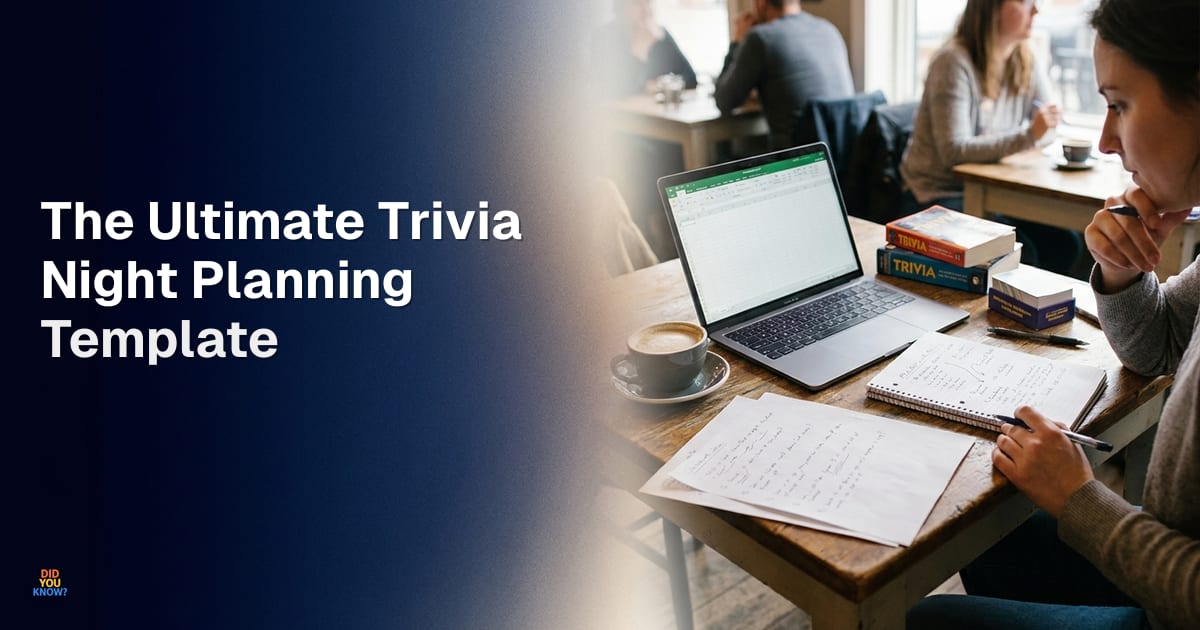
You have the perfect theme and a killer set of questions. But the success of your event hinges on what happens before the first question is asked. A truly memorable trivia night runs on clean logistics, not just clever content. Underplanning the operational details is the single most common failure point we see, turning what should be a fun competition into a chaotic scramble.
This is not another list of question ideas. This is an operational framework. Use this trivia night planning template to move from concept to a fully executable plan, ensuring every detail is accounted for so you can focus on being a confident, engaging host.
How to Use This Trivia Night Planning Template
This template is structured to guide you from high-level strategy down to a minute-by-minute schedule. It prevents critical tasks from falling through the cracks. For best results, work through it sequentially. Completing one section provides the necessary inputs for the next, creating a clear and logical planning flow.
Start with the Event Vitals: Define the core parameters of your event. This top-level view ensures every subsequent decision aligns with your primary goals.
Complete the Pre-Event Logistics Checklist: Tackle the tangible items and technical requirements. This is where you anticipate needs for promotion, equipment, and supplies.
Design the Game Structure: Outline the participant’s journey. Decide on the number of rounds, formats, and scoring rules before you finalize the content.
Build the Day-of Run of Show: Create a detailed timeline for the event itself. This script is your guide to keeping the evening on track and managing time effectively.
The Trivia Night Planning Template: Section by Section
Each component of this template serves a distinct purpose in your trivia night planning process. Here’s a breakdown of what to capture in each section to build a comprehensive event plan.
Part 1: Event Vitals
This is your event’s mission control. It defines the who, what, where, when, and why. Getting these details right at the start ensures your entire plan is coherent.
Event Date & Time: The specific date and start/end times.
Venue & Address (or Virtual Platform & Link): The physical or digital location.
Target Audience: e.g., ‘Bar patrons, age 25-40’, ‘Corporate marketing department’.
Primary Goal: e.g., ‘Increase weekly bar revenue’, ‘Boost team morale’.
Estimated Attendance: Your target number for capacity and supply planning.
Part 2: Pre-Event Logistics Checklist
This section covers the crucial groundwork. A week before the event is too late to discover you don’t have enough pens or a working microphone. This checklist prevents day-of emergencies.
Promotion Plan: Channels (social media, email, flyers) and a timeline.
Prizes: What they are, how they were sourced, and when they’ll be awarded.
A/V Equipment: Mics, speakers, projector, screens, and necessary cables. Confirm they are tested and working.
Supplies: Answer sheets, pens, scoring trackers, and any theme-specific props
Accessibility: Consider physical access to the venue or digital accessibility features. The UN’s guidelines on accessibility offer a strong framework for inclusive events.
Part 3: Game Structure & Content
Here, you architect the game itself. A well-structured game feels intentional and keeps players engaged. This is where you map out the flow before writing every last question. You must find the right balance of question difficulty to keep it fun for everyone.
Number of Rounds: Typically 4-6 rounds is ideal.
Round Themes & Formats: e.g., ‘Round 1: General Knowledge (Multiple Choice)’, ‘Round 2: Name That Tune (Audio)’, ‘Round 3: 90s Movies (Picture Round)’.
Scoring System: Points per question, bonus points, and final wager rules.
Tie-Breaker Plan: A single, challenging question ready to go.
Part 4: Day-of Run of Show
This is your script for the event. A minute-by-minute schedule removes guesswork and empowers you to run the event with authority and confidence. It should feel like a production schedule.
T-60 min: Host arrives, venue setup, initial A/V check.
T-30 min: Welcome music starts, final check of mics and presentation.
T-15 min: Doors open, team registration begins.
T-0 min: Event start. Host welcome, introduction, and rules explanation.
T+10 min: Round 1 begins.
T+25 min: Round 1 ends, answer collection, and scoring break.
An Example of a Completed Plan
To make this tangible, here’s how the template might look for a recurring weekly trivia night at a local brewery. Notice the level of detail.
Example: ‘Taproom Trivia Tuesday’
Event Vitals:
– Date: Every Tuesday, 7:00 PM – 9:00 PM
– Venue: The Hop Yard Brewery, 123 Main St.
– Target Audience: Local craft beer enthusiasts, couples, groups of friends (age 21-50).
– Primary Goal: Drive foot traffic and sales on a typically slow weeknight.
– Estimated Attendance: 40-60 players (10-15 teams).
Game Structure:
– Rounds: 5 rounds of 10 questions each.
– Themes: Round 1 (General Knowledge), Round 2 (Picture Round: Album Covers), Round 3 (Audio Round: TV Theme Songs), Round 4 (Themed: ‘Science & Nature’), Round 5 (Final Wager Round). We often explore different trivia formats to keep it fresh.
– Scoring: 1 point per correct answer. Final round allows teams to wager 0-10 of their accrued points.
Run of Show Snippet:
– 6:00 PM: Host arrives, sets up sound system and projector with brewery manager.
– 6:45 PM: Pre-event slideshow with rules and specials is running on screen. Background music is on.
– 7:00 PM: Host makes official welcome, explains rules, and encourages drink orders.
– 7:05 PM: Round 1 begins.
Putting Trivia Night Planning Into Practice
A successful event is the direct result of deliberate trivia night planning. This trivia night planning template provides the scaffolding to ensure nothing is left to chance. By focusing on the operational framework first, you free yourself up to be a charismatic and effective host on the night of the event. It transforms hosting from a stressful task into a rewarding performance.
Your event’s logistics are just as important as the quality of your trivia questions.
A detailed, minute-by-minute schedule is a professional tool, not an optional extra. It is the core of how to properly host trivia.
Structure the game’s flow, rounds, and rules before you get lost in writing content.
Anticipate your technical and supply needs well in advance to prevent day-of failures.
As you refine your hosting skills, you’ll find new ways to engage your audience and craft compelling content. For deeper insights into question writing, game formats, and audience engagement, explore the resources available at Did You Know?. Our guides are built from the experience of countless hosts, and you can use them to perfect your next event.
Frequently Asked Questions
How far in advance should I start planning a trivia night?
For a first-time or large-scale event, start planning 4-6 weeks in advance. This allows ample time for promotion, venue coordination, and content creation. For a recurring weekly event, a 1-2 week rolling planning cycle is more manageable once you have your core template and processes established.
What’s the most common mistake new trivia hosts make?
The most common mistake is focusing exclusively on writing clever questions while neglecting the event’s logistics and flow. While crafting engaging questions is important, overlooking elements like sound quality, a clear scoring process, and smooth transitions can lead to a disjointed experience.
Imagine a trivia night where the microphone keeps cutting out, leaving participants straining to hear, or where the scoring system is so convoluted that teams are left confused and frustrated. Even the most brilliantly designed questions can’t save an event plagued by long, awkward pauses between rounds or technical glitches. This is precisely the problem a good planning template solves.
By providing a structured approach to organizing your event, it ensures that all logistical aspects are covered, from setting up the audio equipment to establishing a clear and fair scoring system. With a comprehensive plan, you can focus on creating an enjoyable atmosphere that keeps the energy high and the participants engaged throughout the night.
How should I handle scoring disputes during the game?
Address them quickly, confidently, and with a consistent rule. Your best policy is ‘The host is always right’. Announce this rule at the start. If a team disputes an answer, listen briefly, make a final call, and move on. To minimize issues, ensure your questions and answers are rigorously fact-checked beforehand.
Leave a Reply