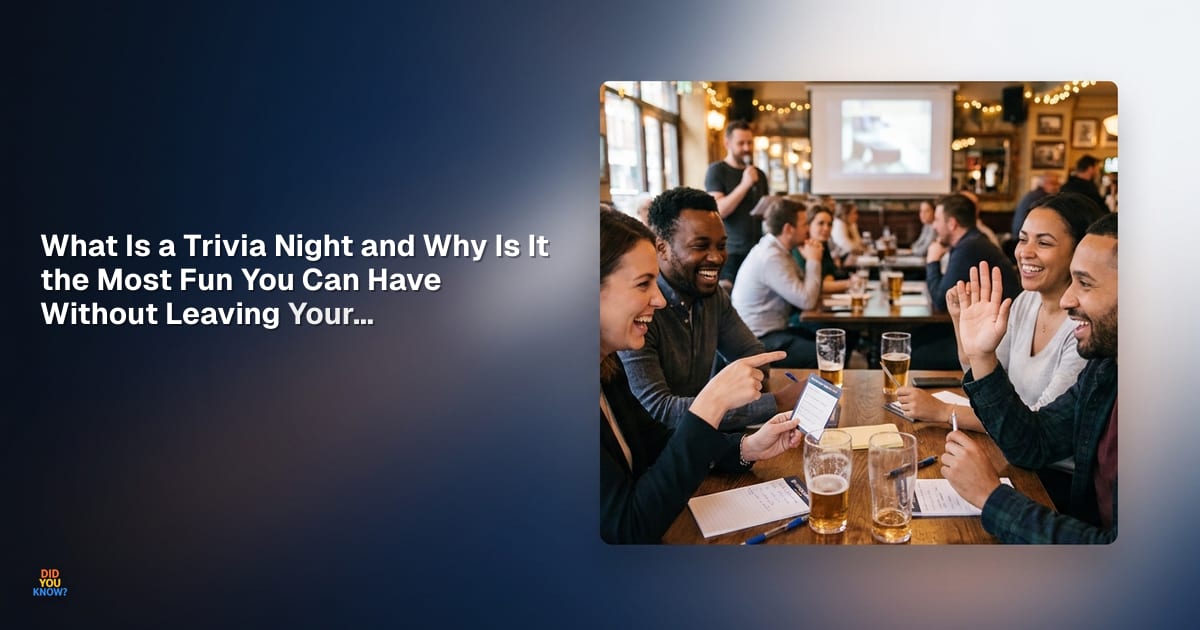
Let’s be honest. You’ve heard the term “trivia night,” and your first thought was probably, “Oh, that’s for people who swallowed an encyclopedia.” The conventional wisdom is that it’s a contest for know-it-alls to show off. But what if I told you the best trivia nights have almost nothing to do with being the smartest person in the room?
In fact, the team that wins is rarely the one with the highest collective IQ. It’s the one that has the most fun arguing, laughing, and pulling a correct answer out of thin air. It’s a team sport for the rest of us, and it might just be the best night out you’re not having yet.
A trivia night is a live, interactive game where teams compete by answering questions on a variety of topics. Often held at a local pub, community hall, or even online, it’s less a test of raw knowledge and more an excuse for fun, low-stakes competition and lively discussion with friends.
Why Are We All Suddenly Obsessed with Quizzes?
It seems like everywhere you look, someone is posting a picture of their trivia team, proudly holding a gift certificate or just a pint of beer. This isn’t a new phenomenon, but it has exploded in popularity. Why? Because it solves the classic modern problem: “What should we do tonight?” It’s a planned activity that’s more engaging than just sitting at a bar and more social than staring at a movie screen.
Trivia gives you a built-in reason to connect. It’s a shared mission. You’re not just making small talk; you’re working together to remember the name of the fourth actor to play Batman or the main ingredient in Worcestershire sauce. This structure turns a simple night out into a memorable event, fostering a sense of community and friendly competition that has people coming back week after week. It’s a powerful tool for social connection, something experts say is vital for our well-being, as noted by organizations like the World Health Organization in their research on health and social bonds.
The Anatomy of a Great Trivia Night
So what separates a truly awesome trivia night from a boring one? It’s all in the design. A great event feels less like an exam and more like a game show where you and your friends are the stars. It all comes down to a few key ingredients.
It’s Not a Test, It’s a Team Sport
The magic of trivia night lives in the teamwork. You might know nothing about 1980s pop music, but your friend Dave is a walking jukebox. You can’t name a single Shakespearean play, but Maria aced her English Lit class. A well-balanced team is a beautiful, chaotic mix of everyone’s niche interests. The real fun isn’t just knowing the answer; it’s the collaborative journey to find it. This dynamic is what makes team-based trivia so much more engaging than playing alone.
The Questions That Make You Talk (Not Just Think)
The heart of any trivia night is, of course, the questions. But the best ones aren’t about obscure facts. They’re designed to be solvable. They might have multiple clues, a clever pun, or connect two seemingly unrelated things. A good question makes your team lean in and debate. “Wait, I think I know this…” is the sound of a perfect trivia question at work. It creates a moment of shared discovery. When you’re ready to try your hand at creating these moments, learning how to write questions that spark debate is the perfect next step.
-
Easy Questions: These are warm-ups that give everyone confidence.
-
Medium Questions: These require some team discussion and are the bread and butter of the game.
-
Hard Questions: These are the head-scratchers that separate the top teams, but they should still feel gettable.
Key Takeaway: A great trivia night isn’t about what you know. It’s about the fun you have figuring it out together. The best hosts design for discussion, not just correct answers.
More Than Just Q&A: The Rounds
A constant barrage of questions can get monotonous. That’s why the best trivia nights mix things up with different round formats. This variety keeps the energy high and gives different players a chance to shine. You might find:
-
Picture Rounds: Identifying logos, celebrities, or movie scenes.
-
Music Rounds: Naming a song and artist from a short audio clip.
-
Themed Rounds: A whole round dedicated to a single topic, like “Science” or even “South Park Season 2.”
-
Final Wager Round: A high-stakes final question where teams can bet their accumulated points.
These creative trivia formats ensure the game never feels stale and caters to different kinds of intelligence, not just rote memorization.
Hosting Your Own vs. Just Showing Up
Once you’ve been to a few trivia nights, the thought might cross your mind: “I could do this.” And you absolutely can. But the experience of hosting is quite different from playing. Both are fun, but they involve different skills and offer different rewards. Deciding whether to be a player or a host comes down to what kind of fun you’re looking for.
|
Aspect |
The Player Experience |
The Host’s Game |
|---|---|---|
|
The Goal |
To collaborate with your team, have fun, and maybe win. |
To create a fun, fair, and engaging experience for everyone. |
|
The Prep Work |
Assemble a team and show up. Maybe come up with a funny team name. |
Write or source questions, create materials, plan logistics, and promote the event. |
|
The Payoff |
Bragging rights, a fun night with friends, and maybe a prize. |
The satisfaction of running a successful event that people love. |
Hosting can seem daunting. You have to worry about balancing question difficulty, managing time, and handling disputes over answers. But the reward is immense. You’re not just participating in the fun, you’re creating it. And with the right guidance, it’s easier than you think.
Where Is Trivia Headed in 2026 and Beyond?
The world of trivia is always evolving. As of 2026, we’re seeing some exciting trends that make the experience even more dynamic and accessible. The classic pub quiz isn’t going anywhere, but it’s being joined by new formats that blend technology and creativity.
Hybrid events are becoming more common, allowing teams to play from home alongside in-person participants. We’re also seeing more interactive elements, like video clips and buzzer rounds managed through smartphone apps. Themed nights are getting hyper-specific, moving beyond “80s Night” to events focused on a single TV show or movie franchise. This constant innovation ensures that trivia remains a fresh and exciting way to connect with others, both in your neighborhood and across the globe.
Your Neighborhood Is More Fun Than You Think
So, a trivia night is much more than a quiz. It’s a social engine, a community builder, and a reliable cure for a boring Tuesday night. It’s a space where knowing a little bit about a lot of things (or a lot about one weird thing) finally pays off. But more importantly, it’s a place to laugh, think, and connect with your friends.
-
It’s a game of teamwork, not just knowledge. The best teams are a mix of different people with different interests.
-
Question design is everything. Great questions spark debate and make everyone feel like they can contribute.
-
Variety is the key to engagement. Picture rounds, music rounds, and other formats keep the energy high.
-
Anyone can participate. Whether you’re a player or an aspiring host, there’s a place for you in the world of trivia.
If you’re feeling inspired to move from player to creator, the journey is incredibly rewarding. Running your first game might seem like a huge leap, but it’s really just a series of small, manageable steps. At Did You Know?, we’ve built a whole library of guides to help you get started. To learn more about planning your first event, you can explore our resources on hosting.
Frequently Asked Questions
How many people should be on a trivia team?
While rules vary, the sweet spot is typically four to six players. This size is large enough to have a good mix of knowledge but small enough that everyone can contribute to the discussion. Too many players can lead to people feeling left out, while too few can put a lot of pressure on each person.
What if I don’t know any answers?
It’s completely fine! The point of trivia night is social fun, not a high-stakes exam. Your job is to be a good teammate, help brainstorm, cheer on your friends, and enjoy the atmosphere. You’ll be surprised how often a random memory or a guess can turn into the right answer.
How do I find a trivia night near me?
Start by checking the websites and social media pages of local bars, pubs, and community centers. Many venues that host trivia have a regular weekly schedule. You can also search online for “trivia night near me” to find event listings and specialized trivia companies that operate in your area.
Can I host a trivia night if I’m not an expert?
Absolutely. Being a great host is about organization and showmanship, not knowing every answer yourself. The key is good preparation. Using trusted resources for well-written questions and following a clear structure will make your event a success. Our guides at Did You Know? are designed for this exact purpose.
Leave a Reply