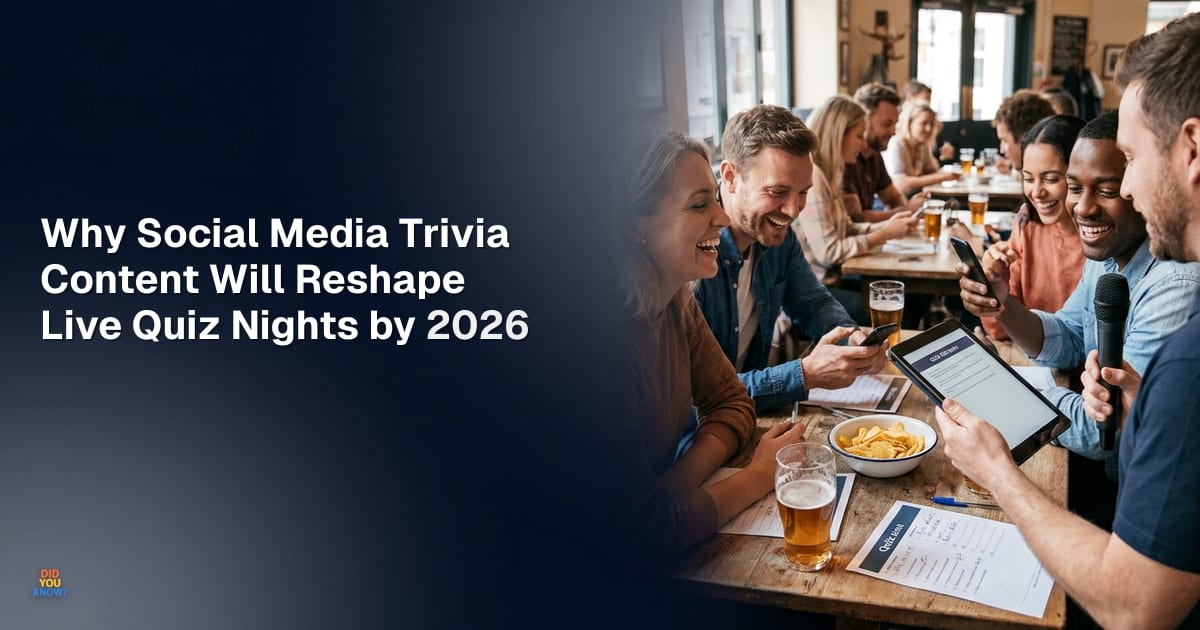
You’ve seen it. Round four, the energy dips, and a team in the corner hands in their answer sheet and immediately whips out their phones. They aren’t cheating. They’re watching 15-second videos of a stranger trying to guess a movie from one very badly drawn icon, and they look more invested in that than in the question I spent twenty minutes writing. Rude. But also useful, because that little screen isn’t your competition. It’s your crystal ball.
Social media trivia, the fast, visual, play-along stuff all over TikTok and Instagram, is changing what people expect from a night out. My bet? By the end of 2027 it’ll be the baseline for a great live quiz night, and a text-only, pen-and-paper quiz will feel a bit like a band showing up without a sound system. Some hosts are already adapting. Here’s what’s changing and how to keep up without turning your pub into a TV studio.
What Social Media Trivia Is Teaching Your Players

Everyone loves to blame shrinking attention spans, but I don’t think that’s the whole story. What’s really changed is how much people expect to get out of a few seconds of content. A viral TikTok trivia clip packs a question, a little suspense, a reveal and a reaction into the time it takes you to read one long question out loud. Your players watch this stuff every day, so that pace starts to feel normal.
Think about the content that gets millions of views:
- Ultra-fast ‘Name That Tune’: Identifying a song from the first half-second of the opening riff.
- Visual Puzzles: Guessing the city from a single, obscure landmark or the movie from a set of emojis.
- Interactive Polls: Instagram Stories that ask a simple trivia question and show the percentage of people who got it right, creating instant social proof and competition.
These formats work because they’re quick, shareable and easy on the eyes, and every right answer gives you a tiny jolt of satisfaction. Big-picture reports like the OECD Digital Economy Outlook track just how much of daily life now happens on screens, and trivia hasn’t escaped that. When your players leave your event, they go right back to a feed full of social media trivia, so of course they start wanting a little of that energy on their night out too.
Your Quiz Night Is Turning Into a Little Media Show
So, what does this look like in practice? It means your role as a host is evolving from a quizmaster into a producer. Your trivia night is no longer just a series of questions; it’s a multimedia show. The projector screen isn’t just for showing the scores at the end of a round. It’s the centerpiece of the entire event.
By 2027, I’d bet a great quiz night includes at least a few of these:
- Video Rounds: Movie clips, sure, but also homemade videos, animated questions or fast-cut montages where teams have to spot the common theme.
- Audio-Visual Mashups: Playing a famous movie quote over a clip from a different film and asking teams to name both.
- Social Media Trivia Teasers: A bonus question posted on the venue’s Instagram story an hour before the quiz, with the answer revealed only in person. This bridges the gap between your online followers and the physical attendees.
- Faster Pacing: Shorter rounds with more questions, or ‘lightning rounds’ that use a buzzer app on players’ phones instead of a pen and paper.
None of this means dumbing anything down. You’re meeting your crowd where they already are and using the tools you have to make the night livelier. The heart of trivia stays the same: the joy of knowing something weirdly specific and celebrating it with your team. You’re only changing how the questions get delivered.
Why This Is Good News for Hosts
This might sound intimidating, but I think it’s a real opportunity, and the reasons are refreshingly practical. First, your audience’s expectations have been permanently altered by their media habits. Presenting them with a format that feels native to their daily scrolling is a shortcut to immediate engagement. You’re speaking their language.
Second, the technology is already in place. Nearly every bar, pub, and event space has a TV or a projector. Creating simple graphics, editing a video clip, or finding high-resolution images has never been easier, with many tools available for free online. You don’t need a degree in film production to create a compelling picture round; you just need a bit of creativity.
Finally, this gets your event out of the building. When a round looks cool, people take pictures and videos. A great theme or a ridiculous video question turns into shareable content that promotes your next night for you. Free advertising from people who already love your quiz? I’ll take that every time.
How Smart Hosts Are Adapting Right Now

The best part is that you can start small. You don’t have to revamp your entire quiz overnight. The smartest hosts are easing into it, testing what works for their specific audience. This is an evolution, not a revolution. Here are some practical first steps you can take:
- Upgrade Your Picture Round: Instead of just showing pictures of celebrities, show extreme close-ups of their eyes, or pixelated images that slowly come into focus. Make it an event.
- Introduce a Video ‘Name That Tune’: Play the official music videos instead of just the audio. It adds a whole new layer of nostalgia and visual interest. Finding new creative trivia formats like this is the first step to standing out.
- Lean into Themes: A media-rich format is perfect for themed nights. For a ’90s night, you can play clips from TV show intros and commercials. Strong trivia night themes become much more immersive with audio and video.
- Rethink Your Questions: A visual format allows for different kinds of questions. Instead of asking ‘What are the three primary colors?’, show a Venn diagram with overlapping colors and ask what brand logo it represents. It requires the same knowledge but is far more engaging. It changes how you need to think about crafting debatable questions.
Start with one of these in your next quiz. Watch the room. See how the energy shifts. The crowd will tell you pretty quickly whether it landed.
So, Should You Panic? (Nope.)
Live trivia isn’t going anywhere, and the things that make it great aren’t changing. People still want to sit with their friends, argue about an answer and feel smart for a minute. What’s changing is the packaging. The hosts who start playing with social media trivia ideas now are the ones who’ll have packed rooms in 2027, and the ones who refuse might start wondering where their regulars went.
- Treat it as an opportunity. It gives you more room to be creative and reach new people.
- Start small. You don’t need a production studio. Add one new media element to your next quiz and build from there.
- Think like a content creator. Make part of your night visual and shareable, and let your players do your marketing for you.
- Your crowd is already primed. They watch this stuff every day. You’re just bringing it into the room.
Trying new formats and watching a room light up is one of my favorite parts of hosting, so have fun with it. For more ideas, check out my guide to creative trivia formats or browse the rest of Did You Know?.
Leave a Reply